
Understanding Cloud-Native Application Protection Platforms (CNAPP)
Cloud-Native Application Protection Platforms (CNAPPs) represent the next evolution in cloud security, integrating various security and compliance capabilities into a unified platform to safeguard cloud-native applications throughout their lifecycle. According to Gartner, CNAPPs "are a unified and tightly integrated set of security and compliance capabilities designed to secure and protect cloud-native applications across development and production."
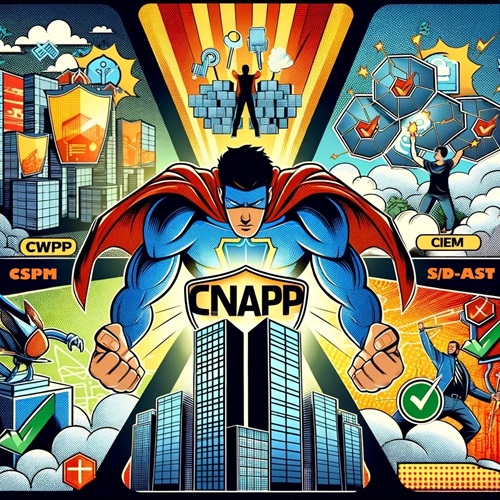
Evolution of CNAPP
CNAPP has evolved from several other solutions, including Cloud Workload Protection Platforms (CWPP), Cloud Security Posture Management (CSPM), Cloud Infrastructure Entitlement Management (CIEM), and others. This evolution is driven by the increasing complexity of cloud-native applications, which require comprehensive and integrated security measures.
From CWPP to CNAPP
CWPP solutions focus on protecting workloads running in cloud environments. They offer capabilities like runtime protection, vulnerability management, and compliance monitoring. However, CWPPs typically address security concerns once the application is already in production. As the development model shifted to cloud-native applications, which are characterized by loosely coupled microservices, continuous integration/continuous delivery (CI/CD) pipelines, and infrastructure as code (IaC), there was a need to integrate security earlier in the development lifecycle.
Integration of CSPM
CSPM tools emerged to address the configuration and compliance of cloud infrastructure. They scan for misconfigurations, vulnerabilities, and compliance violations in cloud services. The primary driver for CSPM adoption has been the need for visibility into cloud infrastructure and the assurance that it complies with security policies and regulatory requirements. By integrating CSPM capabilities, CNAPPs provide a more holistic approach to cloud security, ensuring that both infrastructure and workloads are secure.
Inclusion of CIEM
CIEM solutions manage identities and permissions in cloud environments. With the increasing use of multiple cloud services and the complex interdependencies between them, managing who has access to what resources has become a significant security challenge. CIEM tools help organizations enforce least-privilege policies and monitor for excessive permissions that could lead to security breaches. CNAPPs incorporate CIEM capabilities to provide comprehensive identity and access management, enhancing overall security posture.
Expanding Capabilities
Beyond CWPP, CSPM, and CIEM, CNAPPs also integrate other security measures, such as software composition analysis (SCA), which scans for vulnerabilities in open-source components and third-party libraries used in applications. Additionally, they offer static application security testing (SAST) and dynamic application security testing (DAST) to identify vulnerabilities in custom code.
The Comprehensive Nature of CNAPP
CNAPPs aim to address the entire lifecycle of cloud-native applications, from development through production, by integrating multiple security and compliance capabilities into a single platform. This integration provides several key benefits:
Unified Visibility and Control
CNAPPs offer unified visibility into both development and runtime environments. This allows security teams to detect and respond to risks across the entire application lifecycle. By breaking down silos between development and operations, CNAPPs ensure that security policies are consistently enforced, and risks are identified and mitigated early in the development process.
Risk Prioritization and Remediation
One of the significant challenges in cloud security is the sheer volume of alerts generated by disparate security tools. CNAPPs address this by prioritizing risks based on their potential impact on the business. They provide context for each identified risk, enabling developers to understand and remediate vulnerabilities quickly and effectively.
Developer-Centric Approach
In modern DevOps environments, developers are increasingly responsible for security tasks such as addressing vulnerabilities and deploying infrastructure as code. CNAPPs are designed with developers in mind, providing tools that integrate seamlessly into their workflows. This reduces friction and ensures that security does not become a bottleneck in the development process.
Comprehensive Coverage
CNAPPs provide comprehensive coverage of cloud-native applications, including:
- Infrastructure as Code (IaC) Scanning: Ensures that cloud infrastructure is configured securely before deployment.
- Container Security: Scans container images for vulnerabilities and misconfigurations.
- API Security: Tests and monitors APIs for security issues.
- Runtime Protection: Monitors applications and workloads in production for anomalies and threats.
Key Components of CNAPP
Infrastructure as Code (IaC) Scanning
IaC allows developers to define cloud infrastructure using code, making it easier to manage and deploy resources. However, it also introduces new security risks. CNAPPs scan IaC scripts for misconfigurations and vulnerabilities before deployment, ensuring that infrastructure is secure from the outset.
Container Security
Containers are a fundamental building block of cloud-native applications. CNAPPs scan container images for vulnerabilities, ensuring that only secure images are deployed. They also provide runtime protection for containers, monitoring for threats and anomalies.
API Security
APIs are critical for communication between microservices in cloud-native applications. CNAPPs test APIs for security issues, such as authentication and authorization flaws, ensuring that they are secure both during development and in production.
Runtime Protection
CNAPPs provide runtime protection by monitoring applications and workloads in production for threats and anomalies. This includes detecting unauthorized changes, monitoring network traffic, and identifying suspicious behavior.
Challenges and Considerations
- Organizational Silos
One of the challenges in adopting CNAPPs is the existence of organizational silos. Different teams (e.g., development, security, operations) often use different tools and have different priorities. CNAPPs require collaboration across these teams to be effective.
- Adversarial Relationship Between Developers and Security
In many organizations, security is seen as a bottleneck that slows down development. CNAPPs aim to change this perception by integrating security into the development process, providing tools that developers can use without disrupting their workflows.
- Existing Investments
Organizations often have existing investments in various security tools. Adopting a CNAPP may require consolidating these tools, which can be a complex and costly process. However, the benefits of a unified platform, such as reduced complexity and improved risk visibility, often outweigh the costs.
- Maturity of CNAPP Solutions
As a relatively new category, CNAPP solutions vary widely in terms of capabilities and maturity. Organizations need to carefully evaluate different offerings to ensure they meet their specific requirements.
Market Direction and Future Trends
The CNAPP market is expected to grow significantly in the coming years as organizations increasingly recognize the need for integrated security solutions for cloud-native applications. According to Gartner, by 2025, 60% of enterprises will have consolidated CWPP and CSPM capabilities to a single vendor, up from 25% in 2022. Furthermore, by 2025, 75% of new CSPM purchases will be part of an integrated CNAPP offering.
Key Drivers for CNAPP Adoption
- Unified Risk Visibility: The need to unify risk visibility across hybrid applications and the entire application lifecycle.
- Vendor Consolidation: The desire to reduce complexity by consolidating security vendors.
- DevSecOps Integration: The need to integrate security seamlessly into DevOps processes, enabling faster and more secure development.
Emerging Capabilities
As CNAPPs evolve, they are expected to incorporate more advanced capabilities, such as:
- Enhanced API Security: Advanced testing and monitoring of APIs.
- Data Security Posture Management (DSPM): Scanning both structured and unstructured data repositories for risks.
- Advanced Analytics: Using machine learning and other advanced analytics to prioritize risks and provide actionable insights.
Conclusion
CNAPPs represent a significant advancement in cloud security, integrating multiple security and compliance capabilities into a single platform to protect cloud-native applications throughout their lifecycle. By providing unified visibility, risk prioritization, and developer-centric tools, CNAPPs help organizations address the growing complexity of cloud-native applications and improve their overall security posture. As the market continues to evolve, CNAPPs will become an essential component of any comprehensive cloud security strategy.