
NIST Standards in Cyber Security: A Comprehensive Overview
The National Institute of Standards and Technology (NIST) is a non-regulatory agency of the United States Department of Commerce. NIST's mission is to promote innovation and industrial competitiveness by advancing measurement science, standards, and technology. In the realm of cyber security, NIST plays a critical role by developing guidelines, standards, and frameworks that help organizations protect their information and systems.

NIST publishes several types of documents to support cyber security efforts:
- Special Publications (SP): These are detailed documents covering a wide range of topics related to information security. They provide guidelines, technical specifications, and recommendations to help organizations secure their information systems.
- Interagency Reports (NISTIR): These reports present research findings, insights, and recommendations on specific topics, often produced in collaboration with other agencies or industry partners.
- Cybersecurity Framework (CSF): This is a voluntary framework designed to improve cyber security risk management, particularly for critical infrastructure. It provides a structured approach to identifying, protecting, detecting, responding to, and recovering from cyber threats.
NIST Special Publication 800 Series
The NIST Special Publication 800 series is one of the most critical resources in the field of cyber security. This series comprises a wide range of documents that cover various aspects of information security and are intended to help federal agencies, as well as private sector organizations, enhance their security posture. These publications provide guidance on everything from risk management to securing specific technologies.
NIST SP 800-53: Security and Privacy Controls for Information Systems and Organizations
NIST SP 800-53 is perhaps the cornerstone of NIST's cyber security framework. This document provides a comprehensive catalog of security and privacy controls for federal information systems and organizations, excluding national security systems. The controls are designed to be flexible and customizable, allowing organizations to tailor them to their specific needs and risk profiles. The publication outlines controls in families, such as access control, audit and accountability, and system and communications protection, each with detailed specifications and implementation guidance. This document is crucial for developing a robust security posture and is often used as a reference in compliance and audit processes.
NIST SP 800-37: Risk Management Framework for Information Systems and Organizations
NIST SP 800-37 provides guidelines for applying the Risk Management Framework (RMF) to federal information systems. The RMF is a structured process that integrates security and risk management activities into the system development life cycle. It consists of six steps: prepare, categorize, select, implement, assess, authorize, and monitor. By following this framework, organizations can ensure that security risks are managed in a consistent, repeatable, and measurable manner. The RMF is designed to help organizations achieve a balance between protecting information and supporting their missions and business objectives.
NIST SP 800-171: Protecting Controlled Unclassified Information in Non-Federal Systems and Organizations
NIST SP 800-171 provides guidelines for protecting controlled unclassified information (CUI) in non-federal systems and organizations. This publication is particularly relevant for contractors and other entities that handle sensitive government information but are not part of federal agencies. It outlines specific security requirements derived from NIST SP 800-53 but tailored to non-federal environments. The document focuses on fundamental security areas such as access control, awareness and training, incident response, and media protection. Compliance with NIST SP 800-171 is often a requirement in federal contracts, making it essential for businesses involved in government projects.
NIST SP 800-30: Guide for Conducting Risk Assessments
NIST SP 800-30 provides a detailed methodology for conducting risk assessments, a critical component of any effective risk management program. This guide helps organizations identify, assess, and prioritize risks to their information systems and data. It outlines a systematic process that includes preparing for the assessment, conducting the assessment, communicating the results, and maintaining the assessment. By following the guidelines in NIST SP 800-30, organizations can develop a thorough understanding of their risk landscape and make informed decisions about mitigating potential threats.
NIST SP 800-61: Computer Security Incident Handling Guide
NIST SP 800-61 offers comprehensive guidance on developing and implementing an effective incident response capability. This publication outlines a four-phase approach to incident handling: preparation, detection and analysis, containment, eradication and recovery, and post-incident activity. It provides practical advice on creating incident response policies and plans, establishing an incident response team, and leveraging tools and technologies to detect and respond to incidents. An effective incident response program, as outlined in NIST SP 800-61, is vital for minimizing the impact of security breaches and ensuring a swift recovery.
NIST Cybersecurity Framework (CSF)
The NIST Cybersecurity Framework (CSF) is a voluntary framework designed to improve the cyber security posture of critical infrastructure organizations. Although it is primarily aimed at critical infrastructure sectors, the framework is widely adopted across various industries due to its flexible and comprehensive approach. The NIST CSF consists of three main components: the Core, the Implementation Tiers, and the Profiles.
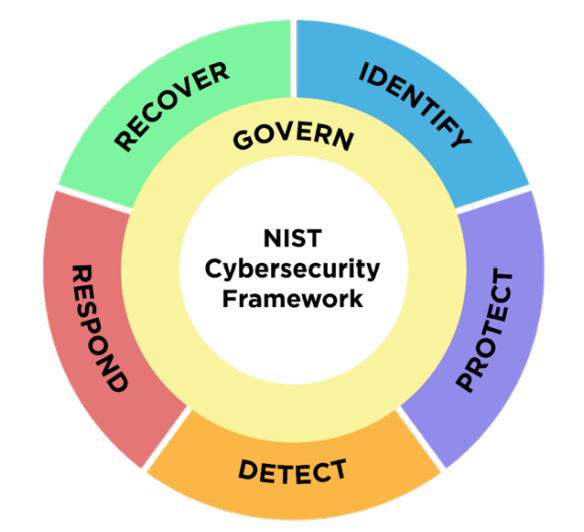
Core
The Core component of the NIST CSF provides a set of cyber security activities, outcomes, and informative references that are common across critical infrastructure sectors. It is organized into five functions: Identify, Protect, Detect, Respond, and Recover. These functions represent high-level objectives for a cyber security program and are further divided into categories and subcategories that provide specific actions and outcomes. The Core helps organizations understand their current cyber security posture and identify areas for improvement.
Implementation Tiers
The Implementation Tiers component of the NIST CSF describes the degree to which an organization's cyber security practices exhibit the characteristics defined in the Framework. The tiers range from Partial (Tier 1) to Adaptive (Tier 4) and help organizations understand the sophistication of their cyber security programs. By assessing their current tier and setting target tiers, organizations can develop a roadmap for improving their cyber security practices and aligning them with their business objectives and risk management strategy.
Profiles
The Profiles component of the NIST CSF represents an organization's unique alignment of its standards, guidelines, and practices with the Framework's Core. Profiles are used to identify and prioritize opportunities for improving the organization's cyber security posture by comparing the Current Profile with a Target Profile. This comparison helps organizations understand the gaps in their cyber security practices and develop action plans to achieve their desired state. Profiles are particularly useful for tailoring the Framework to meet specific organizational needs and ensuring that cyber security efforts are aligned with business objectives.
NIST Interagency Reports (NISTIR)
In addition to the SP 800 series and the Cybersecurity Framework, NIST also publishes Interagency Reports (NISTIRs) that address various aspects of cyber security. These reports provide additional insights, research findings, and recommendations that complement the primary guidelines and standards.
NISTIR 7628: Guidelines for Smart Grid Cyber Security
NISTIR 7628 provides a comprehensive set of guidelines for ensuring the cyber security of Smart Grid systems. As the electrical grid becomes increasingly digital and interconnected, protecting it from cyber threats is paramount. This report outlines an overall security architecture, including high-level security requirements, a risk assessment framework, and recommendations for standards and best practices. The guidelines in NISTIR 7628 are designed to help organizations involved in Smart Grid development and operation to secure their systems against emerging threats.
NISTIR 8259: Foundational Cybersecurity Activities for IoT Device Manufacturers
NISTIR 8259 focuses on the cyber security challenges associated with Internet of Things (IoT) devices. With the proliferation of IoT devices in various sectors, ensuring their security is critical. This report provides foundational cyber security activities that IoT device manufacturers should incorporate into their product development processes. These activities include identifying expected customers and use cases, defining device security capabilities, and providing device support and maintenance. By following these guidelines, manufacturers can help ensure that their IoT devices are secure and resilient against cyber threats.
NISTIR 7864: Guidelines for Access Control System Evaluation Metrics
NISTIR 7864 provides guidelines for evaluating access control systems, which are critical for protecting sensitive information and ensuring that only authorized individuals can access it. This report introduces a set of metrics for assessing the effectiveness of access control systems, including factors such as user authentication, access enforcement, and monitoring. By using these metrics, organizations can objectively evaluate their access control systems and identify areas for improvement.
Summary
When approaching a new endevour in Cyber Security, it holds true that someone has most likely walked that path before. There will be a method, process and strategy and NIST is always a great place to start. NIST's contributions to cyber security through its standards, guidelines, and frameworks are invaluable for organizations seeking to protect their information systems and data. The NIST Special Publication 800 series, the Cybersecurity Framework, and the Interagency Reports provide comprehensive and practical guidance for managing cyber security risks. By adopting and implementing these standards, organizations can enhance their security posture, comply with regulatory requirements, and ensure the resilience of their operations in the face of evolving cyber threats.