
Ethical Dilemmas in Cybersecurity
Cybersecurity professionals face numerous ethical dilemmas and difficult decisions. These challenges are compounded by the rapid evolution of cyber threats and the critical need to balance security with privacy, legality, and ethical considerations. This article explores some of the most pressing ethical dilemmas and the complexities involved in making decisions and the possible impacts of taking action.
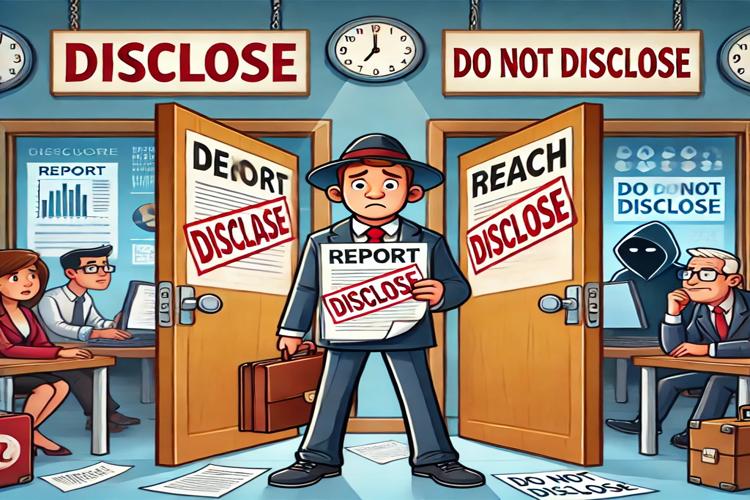
Disclosure Dilemmas: To Report or Not to Report
One core dilemma, particularly during an incident is whether to disclose a breach to stakeholders, including customers, partners, and regulatory bodies. On one hand, transparency is critical for maintaining trust and complying with legal requirements. On the other hand, premature disclosure can cause panic, damage reputations, and even give attackers an advantage.
For example, if a financial institution discovers a security breach, it must decide whether to report the incident immediately or wait until more information is available. Immediate disclosure could reassure customers about the institution's commitment to transparency but might also lead to a loss of confidence in the organisation's ability to protect their assets. Conversely, delaying disclosure until the full extent of the breach is understood might be seen as a cover-up.
The decision to disclose is further complicated by varying legal requirements across different jurisdictions. Some regions have strict breach notification laws, while others have more lenient or non-existent regulations. Cybersecurity professionals must navigate this complex legal landscape while making ethical decisions about disclosure.
The Balancing Act: Security vs. Privacy
One of the most fundamental ethical dilemmas in cybersecurity is balancing the need for security with the right to privacy. When responding to an incident, cybersecurity teams often need to access sensitive information to identify the source and scope of the breach. However, this access can conflict with individuals' privacy rights.
For instance, consider a situation where an organisation experiences a data breach. The cybersecurity team might need to review employee emails and personal data to trace the attacker's steps. While this action is crucial for securing the network, it also intrudes on personal privacy. Striking the right balance between these competing interests is a persistent challenge.
Privacy concerns are not just internal. External stakeholders, such as customers and clients, also expect their data to be protected. Organisations must navigate these expectations while taking necessary actions to mitigate the incident.
Attribution Challenges: Identifying the Attacker
Identifying the perpetrator of a cyber attack is a crucial yet ethically challenging task. Accurate attribution is essential for holding the correct parties accountable and preventing future attacks. However, the process of attribution is fraught with difficulties, including the risk of false accusations.
Cyber attackers often use sophisticated techniques to obscure their identities, such as spoofing IP addresses or using compromised systems as proxies. As a result, attribution requires careful analysis and sometimes even cooperation with law enforcement and intelligence agencies. An incorrect attribution can have serious consequences, including diplomatic conflicts and wrongful accusations.
The ethics of hacking back — launching a counter-attack against the perceived attacker — are highly controversial. While some argue that hacking back is a legitimate form of self-defense, others contend that it can escalate conflicts and cause collateral damage. The decision to engage in hacking back raises profound ethical questions about justice, proportionality, and the rule of law.
The Insider Threat: Managing Internal Risks
Insider threats pose a significant ethical dilemma for cybersecurity professionals. Insiders — employees, contractors, or business partners — have legitimate access to an organisation's systems and data, making it difficult to detect malicious activity. Balancing the need for security with the trust placed in insiders is a delicate task.
Consider a scenario where an organisation suspects an employee of leaking sensitive information. Monitoring the employee's activities might be necessary to confirm the suspicion, but it also raises ethical concerns about surveillance and trust. Overzealous monitoring can create a culture of mistrust, potentially harming employee morale and productivity.
Additionally, cybersecurity teams must decide how to handle insider threats once they are identified. Should the organisation pursue legal action, terminate the employee, or attempt to rehabilitate them? Each option has ethical implications, including the potential impact on the individual's career and reputation.
Ethical Hacking: Penetration Testing and Vulnerability Disclosure
Penetration testing and vulnerability disclosure are critical components of a robust cybersecurity strategy, but they come with their own set of ethical challenges. Ethical hackers, or white-hat hackers, test an organisation's defenses by attempting to breach its systems. While this practice helps identify and fix vulnerabilities, it also involves simulating attacks that can cause disruptions.
For instance, during a penetration test, ethical hackers might exploit a vulnerability that causes a temporary system outage. While the ultimate goal is to improve security, the immediate impact on operations can be significant. Ethical hackers must navigate the fine line between thorough testing and minimizing disruption.
Vulnerability disclosure presents another ethical dilemma. When ethical hackers discover vulnerabilities, they must decide whether to disclose them publicly, inform the affected organisation privately, or both. Public disclosure can pressure organisations to act quickly but might also expose them to additional risks if the vulnerability is not patched promptly. Private disclosure allows organisations to address the issue discreetly but relies on their willingness to act.
The Role of Automation and Artificial Intelligence
The increasing use of automation and artificial intelligence (AI) in cybersecurity introduces new ethical considerations. Automated systems can enhance threat detection and response times, but they also raise questions about accountability, bias, and decision-making.
For example, AI-driven security systems can analyze vast amounts of data to identify potential threats. However, these systems might also generate false positives, flagging benign activities as malicious. This can lead to unnecessary investigations and potential privacy infringements. Cybersecurity professionals must ensure that automated systems are accurate and fair, minimizing the risk of bias and error.
The deployment of AI in cybersecurity decision-making raises questions about accountability. If an automated system makes a critical decision during an incident, such as isolating a compromised network segment, who is responsible for that decision? Ensuring human oversight and accountability is essential to address these ethical concerns.
International Considerations: Cross-Border Cybersecurity Issues
Cyber threats often transcend national borders, complicating the ethical landscape of incident response. International collaboration is crucial for addressing these threats, but it also involves navigating different legal, cultural, and ethical frameworks.
For instance, a multinational corporation might face a cyber attack originating from a foreign country. Responding to the incident could involve sharing information with international partners, which raises concerns about data privacy and sovereignty. Different countries have varying regulations regarding data sharing and cybersecurity practices, creating ethical and legal challenges.
The principle of non-interference in the domestic affairs of other states can conflict with the need for cross-border cooperation in cybersecurity. Organisations must carefully consider the ethical implications of their actions in an international context, balancing the need for effective incident response with respect for national laws and sovereignty.
Ethical Frameworks and Best Practices
To navigate the complex ethical landscape of cybersecurity incident response, professionals can rely on established ethical frameworks and best practices. These frameworks provide guidance for making ethical decisions and balancing competing interests.
One such framework is the ACM Code of Ethics, which outlines ethical principles for computing professionals. The code emphasizes the importance of public good, privacy, and integrity, providing a foundation for ethical decision-making in cybersecurity.
Another valuable resource is the ISSA Code of Ethics, which promotes ethical conduct among information security professionals. The code encourages honesty, responsibility, and respect for privacy, helping professionals navigate ethical dilemmas during incident response.
Organisations can also implement best practices to foster an ethical cybersecurity culture. These practices include:
- Establishing clear policies and procedures for incident response that prioritize ethical considerations.
- Providing regular ethics training for cybersecurity teams to ensure they are aware of the ethical implications of their actions.
- Encouraging transparency and open communication about ethical dilemmas, fostering a culture of trust and accountability.
- Implementing robust oversight mechanisms to ensure that ethical standards are upheld during incident response.
Summary
Ethical dilemmas and difficult decisions are inherent in cybersecurity incident response. Balancing security with privacy, determining the right course of action for disclosure, accurately attributing attacks, managing insider threats, conducting ethical hacking, leveraging automation responsibly, navigating international issues, and adhering to ethical frameworks all pose significant challenges.
By understanding these ethical dilemmas and adopting best practices, cybersecurity professionals can better navigate the complexities of incident response. It is crucial to recognize that there are no one-size-fits-all solutions; each incident presents unique challenges that require careful consideration of ethical principles and the specific context.
As technology continues to evolve, new ethical dilemmas will emerge, necessitating ongoing education and adaptation within the cybersecurity community. By fostering a culture of ethical awareness and accountability, organisations can enhance their resilience against cyber threats while maintaining trust and integrity.
Ultimately, the goal is to protect not only the digital infrastructure but also the rights and interests of individuals and society as a whole. Ethical cybersecurity practices are essential for achieving this balance and ensuring a secure, fair, and trustworthy digital future.