
Cybersecurity Mesh Architecture and the Move to Platformization
As the complexity of digital infrastructures grows, businesses are increasingly turning towards modular and scalable cybersecurity solutions to meet their evolving needs. Two pivotal frameworks driving this shift are the Cybersecurity Mesh Architecture (CSMA) and Platformization. These approaches are transforming how organisations protect their assets and manage their security tools, fostering agility, collaboration, and increased efficiency.
What is Cybersecurity Mesh Architecture?
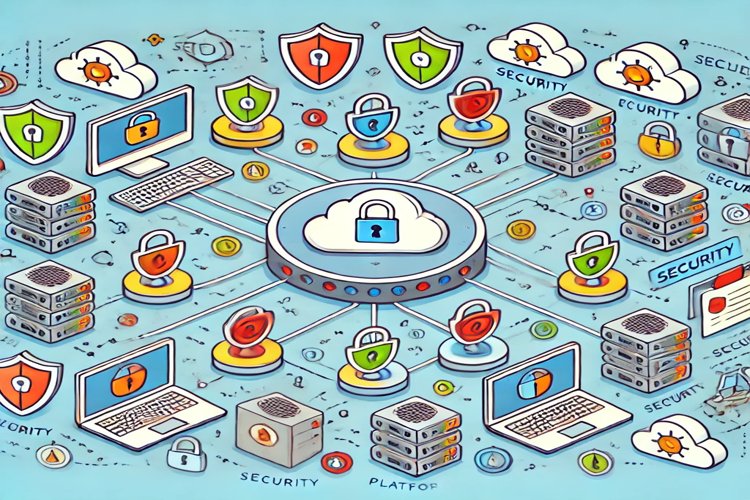
CSMA is an emerging framework that integrates various security tools into a cohesive, interoperable ecosystem. The goal is to break down the silos often associated with traditional security solutions and ensure that security tools can work together, irrespective of where they are deployed—whether on-premise, in the cloud, or in hybrid environments.
Traditional security approaches, where individual tools operate in isolation, are becoming less effective in protecting widely distributed and dynamic systems. CSMA addresses this by providing a more flexible, responsive security framework, allowing organisations to scale and adapt their defences as new threats emerge. One key component of CSMA is the ability to unify security controls through standard APIs, ensuring consistent enforcement of policies and improved real-time monitoring.
Key Components of CSMA
CSMA operates through several foundational layers that work in unison to provide a robust security posture:
- Security Analytics and Intelligence: Gathers data from various tools, allowing for better threat detection and more informed decision-making.
- Identity Fabric: Focuses on identity management as a core element, emphasising that security perimeters are now defined by identity rather than physical boundaries.
- Policy and Posture Management: Provides centralised policy enforcement across different security tools and services, ensuring uniform security governance.
- Unified Dashboards: Allows security teams to have a comprehensive view of their entire security architecture, facilitating faster responses to threats.
This composability makes CSMA particularly attractive to enterprises adopting a hybrid cloud model, as it ensures that different security controls can be applied flexibly and cohesively across diverse environments. The architecture allows for dynamic scaling, which is critical in responding to today’s increasingly sophisticated cyber threats.
Platformization in Cybersecurity
Alongside CSMA, the move towards platformization is reshaping how organisations approach cybersecurity. In essence, platformization refers to the integration of multiple cybersecurity tools, capabilities, and services into a unified platform that can be easily managed and scaled. This shift is driven by the desire for simplicity, cost efficiency, and automation.
With the increasing adoption of cloud services and the need for faster, more responsive security measures, businesses are finding that platform-based solutions offer several advantages:
- Consolidation: Bringing various security functions into a single platform reduces complexity and operational overheads.
- Automation: Modern platforms leverage artificial intelligence (AI) and machine learning to automate routine tasks, such as threat detection and incident response, which improves efficiency and reduces manual intervention.
- Flexibility: Organisations can easily add or remove services based on their changing security needs, ensuring that the platform grows with the organisation.
By moving away from the best-of-breed approach, where individual tools are selected and deployed independently, platformization allows businesses to focus on the bigger picture of improving security outcomes while reducing the total cost of ownership (TCO).
The Synergy Between CSMA and Platformization
While CSMA and platformization are distinct approaches, they are complementary in many ways. CSMA provides the modular, flexible foundation that allows organisations to adapt to changing threats across distributed environments. Platformization, on the other hand, offers the management and automation capabilities needed to operate security tools more efficiently.
The integration of these two frameworks can significantly enhance an organisation’s security posture. CSMA ensures that security controls are adaptable and distributed, while platformization simplifies the management of these controls by offering a single, consolidated platform for monitoring and automation. Together, they create a holistic approach that is both scalable and efficient, meeting the needs of modern enterprises as they face an ever-expanding array of cyber threats.
Looking Ahead: The Future
As organisations continue to evolve their digital infrastructures, the need for flexible and scalable security architectures will only grow. CSMA offers a powerful solution for enterprises looking to manage security across increasingly fragmented environments, while platformization provides the tools to simplify and automate security operations.
The combination of these frameworks is likely to define the future of cybersecurity, offering a more resilient and responsive approach to protecting organisational assets. By embracing both CSMA and platformization, businesses can position themselves to better handle the challenges of tomorrow’s cyber landscape.